


The Most Challenging U.S. Opens in golf History: A Legacy of Ultimate Tests
Historical Significance and Course Evolution
The U.S. Open has earned its reputation as golf’s most demanding major championship, characterized by lightning-fast greens, narrow fairways, and punishing rough conditions.As Cary Middlecoff famously stated, “Nobody wins the Open; it wins you.” This philosophy has shaped the tournament’s identity throughout its 125-year history.
Record-Breaking Difficulty at Myopia
The 1898 U.S. Open at Myopia Hunt Club set unprecedented standards for difficulty. Fred Herd’s winning score of 328 remains the highest in championship history. The tournament’s third-round scoring average of 91.3 and J.D.Tucker’s record-high round of 157 led organizers to permanently remove Myopia from future rotation.
The Monster of Oakland Hills
The 1951 championship at Oakland Hills Country Club introduced Robert Trent Jones’s revolutionary course design featuring knee-high fescue, steep-faced bunkers, and extraordinarily narrow fairways. Ben Hogan’s victory at 7-over-par, accompanied by his famous “monster” quote, exemplified the course’s extreme challenge.
The Massacre at Winged Foot
The 1974 U.S.Open at Winged Foot Golf club earned its “massacre” moniker with unprecedented 6-inch rough and the highest scoring average (76.73) in modern championship history. Hale Irwin’s winning score of 7-over-par demonstrated the course’s brutal difficulty, creating a tournament that remains legendary in golf lore.
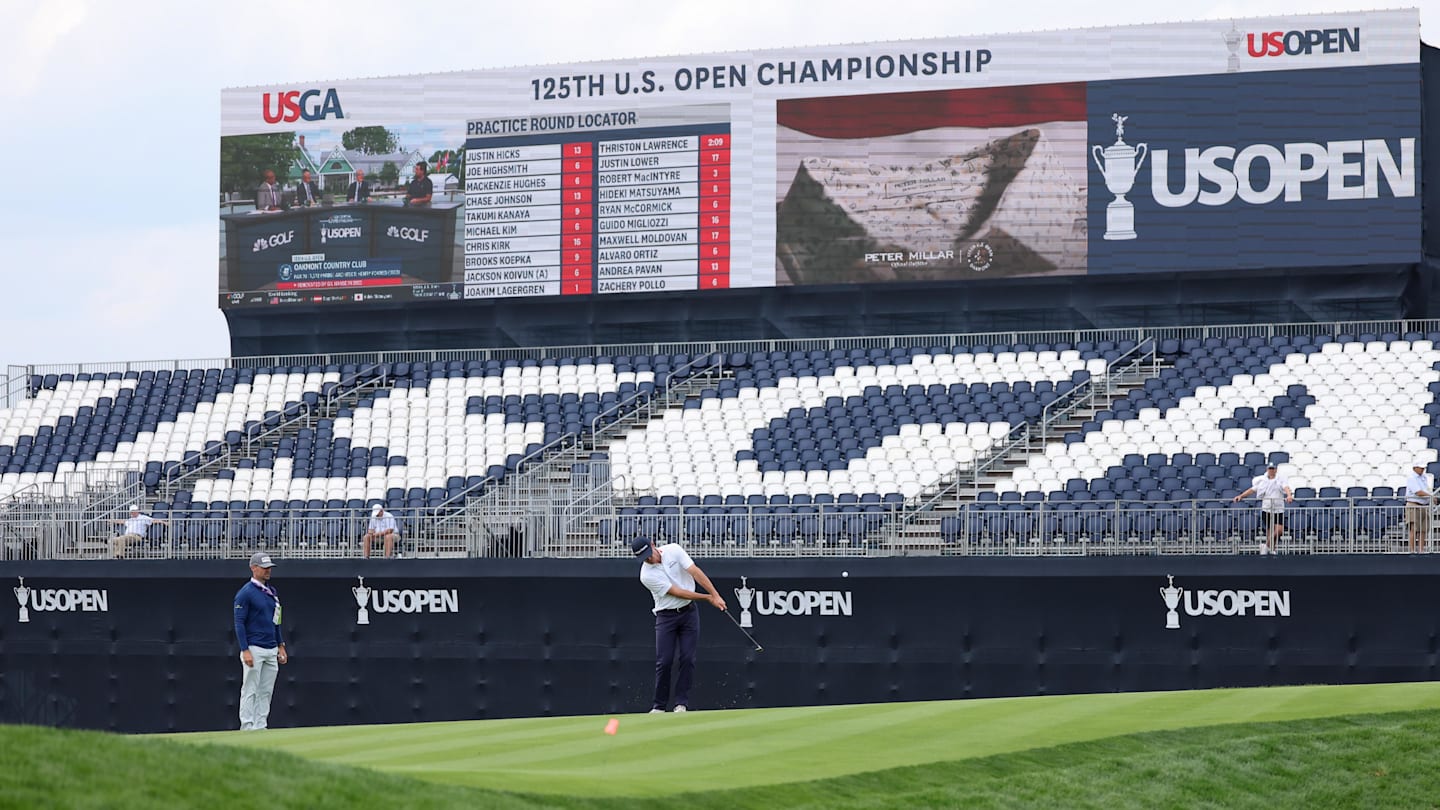
Modern challenge at Oakmont
The 2007 championship at Oakmont Country Club maintained the tradition of extreme difficulty, with Angel Cabrera’s 5-over-par victory highlighting the course’s enduring challenge.Tiger Woods’s assessment that average golfers “couldn’t break 100” underscores Oakmont’s reputation as one of golf’s most formidable venues.
